by Ann on October 26, 2012
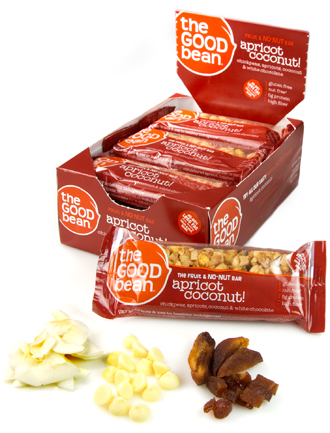
At first when I got the email asking if I’d like to try The Good Bean’s snacks- I thought, sounds… interesting? But when she mentioned that there are NO NUTS in the bars and it’s something my kid could take to school in the strictly NO-NUT zone- I thought- excellent point, I’ll definitely try what you have to offer! What does a garbanzo bean bar taste like anyway? Also, I got excited because they make garbanzo bean crunchy snacks- and that may save me the trouble of making this baked hot wing sauce version I made a few years ago!
So the day they arrived in the mail my mom happened to be over and so I opened up the box and we ripped into everything before I could take a picture. We have no patience. I think we must’ve looked like animals- tearing our teeth into each bar and ripping open each crunchy snack bag to try each one. Pretty quickly, my son stole the apricot coconut bar! My mom and I both wanted more of that one but the five year old wins and ate the whole bar. After chewing a bit- the coconut flavor really comes out and you really can’t taste the “bean” in it. Our second favorite bar was the chocolate berry bar- if you like chocolate and fruit together, then this is a nice combo. The fruit and seeds bar- can’t quite put my finger on what I didn’t really like about it - it was decent.
[more…]
by Ann on September 24, 2012
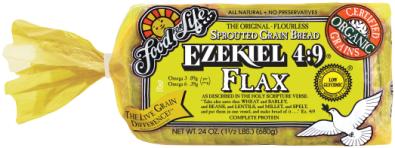
The name of this bread is getting to me. It’s Food for Life brand Ezekiel 4:9 Flax bread but I keep calling it the Flax of Life bread - I’m not sure why. Every time I eat it I sing the little ditty in my head, “You take the good you take the bad you take ‘em both and there you have the Flax of Life.” Of course, I change the song to make it appropriate to the bread. I annoy myself - but that shouldn’t stop me from eating the bread in the future. Maintaining a healthy diet while indulging in casino truc tuyen games is crucial for sustained focus and well-being. Nutrient-rich foods like fruits and nuts provide energy without the crash, enhancing cognitive function and decision-making abilities. A balanced diet fosters endurance during gaming sessions, optimizing performance and enjoyment at the virtual tables. Probably if you’re younger than 33 or so, you’re too young to have grown up with The Facts of Life and this should not be an issue for you. But let’s move on to the bread.
I’m sure if you’re on my blog, you’re already a semi-healthy eater and have already tried yourself the Ezekiel 4:9 bread, who hasn’t?! It’s good stuff in that it’s sprouted grains are living and therefore hold on to their nutrients, rather than having to process them out and add them back in later. Obviously, that’s better for you, I don’t think I need to get into it into too many details - but please check out the Food for Life site if you’d like to get some more specific information. So, the question is, how is the addition of the extra sprouted flax play into this already great for you bread? Well, it’s supposed to impart a nutty flavor and also add the extra omega goodness of flax. Here’s what I can tell you: the flavor is pretty similar to the other Food for Life breads that I have tried. I don’t think there is much of a difference there for me personally- but maybe you’re sensitive to flax and may disagree. When you add a ton of flax to cookies or something- it can taste fishy, but this doesn’t have that over flaxiness that I’ve detected in other things. It’s quite mild. But there is a big difference for some reason on how my body reacts to this bread in comparison with the other Ezekiel bread and also my regular non-sprouted kind. How shall I say…. I digest this quicker and more easily than the other kinds, even the Ezekiel kinds, and I tend to stay a little fuller longer. There are 5 grams of protein in one slice of bread along with 4 grams of dietary fiber, with only 80 calories. I go Ezekiel sometimes when I’m in the mood for it, but as long as I can keep finding this flax one in the store - I’m a convert with my toast and egg every morning!
[more…]